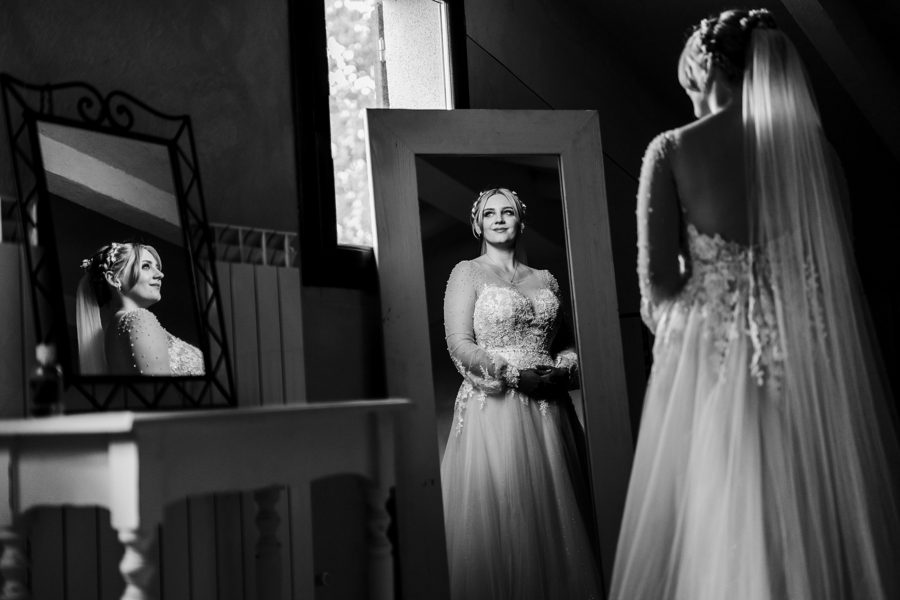
A good wedding photography timeline gives you room to enjoy your day. It makes space for photographs without making the whole celebration feel like a photoshoot. Before choosing exact times, decide what you want to remember: the anticipation, the ceremony, everyone around one table, a few quiet minutes together or the dance floor at its happiest.
There is no single timetable that suits every wedding in the Algarve. A ceremony and reception in one place need a different plan from a day with several addresses. Use the questions below as a starting point, then work through the details with your photographer and the people organising your celebration.
Begin with the parts that are already fixed
Write down your ceremony time, any venue access restrictions and the time you want to sit down for your meal. Add the addresses for preparations, the ceremony and the reception. These are the anchors; the photographs fit around them.
Plan the real journey, including the little transitions. Getting from a room to a waiting car, gathering a bouquet, finding a parking space and walking to the next location all take time. Ask someone familiar with each venue to help you check the route. A map estimate is a useful beginning, rather than a complete schedule.
Give preparations a beginning and an ending
Think about whose preparations you would like photographed and whether they happen in the same place. If they are separate, discuss what one photographer can realistically cover. Decide which details matter to you and keep them together before photography begins: rings, stationery, a meaningful piece of jewellery or something borrowed.
Leave a comfortable gap between getting dressed and leaving. That space can hold a portrait, a hug or a few minutes to breathe. It also helps when hair, makeup or a missing button takes longer than expected. You do not need a photograph of every detail for the story to feel complete.
Make family photographs easy for your people
Write a short list of the group combinations you genuinely want. Use names as well as relationships, especially when families are large or there are people who need a little extra consideration. Choose a relative or friend who knows the guests and can help gather each group.
Share anything that affects comfort or access, such as a guest who cannot stand for long. A nearby, straightforward location is often kinder to everyone than an elaborate backdrop some distance away. Keep the group list focused so people can return to the celebration.
Protect some time for the two of you
I plan couple portraits individually with each pair. Depending on what you want to do, the session can last from around half an hour to two hours. Some couples want a brief pause close to their guests; others would enjoy a longer walk and a change of scenery. Choose the length together instead of borrowing a timetable from another wedding. We also allow for the journeys and walking involved, so the time you set aside fits the actual plan.
You can also discuss two smaller portrait moments rather than one long session. The right choice depends on the ceremony, your guests, the location and the light. It should help the day flow, rather than interrupt an important meal or speech.
Work with the light and keep a little flexibility
Check the light for your actual date and the orientation of your location. A cliff, a building or a line of trees can put a spot into shade before the published sunset time. Your photographer can help you decide where portraits fit most naturally.
Golden hour is an option to plan for, not a reason to rush your celebration. There are meaningful photographs to make throughout the day. Agree on an alternative if wind, rain, delays or an unexpected change makes the original plan uncomfortable.
Share one clear version of the plan
When the main decisions are made, give your photographer, planner and relevant suppliers the same timetable. Include a contact person for practical questions so you do not have to answer every phone call. Build in some unallocated breathing room, particularly around travel and the ceremony.
The plan has done its job when you can put it away and be present. Leave room for the unscripted moments: they are often the ones that bring you straight back when you open your gallery.
Tell me your ceremony time, the places involved and what matters most to you. We can shape photography around the celebration you actually want.